Why Pilates Works Best in a Private, Duet, or Small Group Setting
Pilates, Chronic Pain Relief, Small Group Training, Gilbert Arizona
Why Pilates Works Best in a Private, Duet, or Small Group Setting
If you live with chronic pain, low back pain, stiffness, weakness, or you are recovering from an injury, the space where you move matters just as much as the movements themselves. At Pilates 4 Me in Gilbert, Arizona, the focus is on personalized Pilates—private, duet, and small group sessions that are intentionally designed to support your body, your history, and your goals. This rehab-infused approach helps you move better, feel stronger, and rebuild trust in your body, one mindful session at a time.
Why the Setting Matters So Much When You Practice Pilates
Pilates is often described as “intelligent movement,” and that intelligence comes from precision, control, and awareness. Those qualities are hard to cultivate when you are lost in a crowd, trying to keep up with a fast-paced routine or copy what the person next to you is doing. For people navigating pain, fatigue, or post-injury limitations, that kind of environment can actually increase discomfort or reinforce unhelpful movement habits.
In contrast, a private, duet, or small group setting creates a space where you are seen and heard. Your instructor can ask about your day, your symptoms, your energy level, and what feels different in your body from one week to the next. The equipment can be adjusted to your size and comfort. The pace can slow down so you can truly feel the work, rather than rush through it. Over time, this kind of environment helps you build confidence, not just strength.
💡 Key Idea: When you are working with pain or recovering from injury, the right setting can turn Pilates from a generic workout into a powerful, personalized tool for healing and resilience.
The Power of Personalized Attention in Pilates
In a large class, one instructor may be responsible for watching 15, 20, or even more people at once. Even the most skilled teacher simply cannot correct every posture, modify every movement, or keep up with every individual’s history of pain or injury. That is where personalized attention becomes not just helpful, but essential—especially for those who do not fit the “one-size-fits-all” fitness mold.
Detailed assessment: In private or duet sessions, your instructor can observe how you stand, walk, sit, and breathe, then design sessions around what your body actually needs instead of a pre-set routine.
Real-time feedback: Small adjustments in alignment—like softening your ribs, lengthening the back of your neck, or grounding through your feet—can dramatically change how an exercise feels and how effective it is.
Customized pacing: Some days your body is ready for more challenge; other days it needs a gentler, restorative approach. Personalized sessions allow the intensity to shift with you, not against you.
This level of attention is particularly important if you are managing chronic conditions such as arthritis, disc issues, scoliosis, or long-standing low back pain. Instead of pushing through discomfort or guessing what is “safe,” you learn how to move in ways that support and respect your body.
Why Private, Duet, and Small Group Pilates Work So Well for Chronic Pain and Low Back Pain
Chronic pain and low back pain are rarely just about one muscle or one joint. They often involve a combination of movement patterns, posture habits, muscle imbalances, stress, and past injuries. In a small, supportive setting, your instructor can address all of these layers instead of simply giving you a list of exercises and hoping for the best.
Safer progressions: Your Pilates program can start with very gentle, supported movements and gradually progress as your body adapts. There is no pressure to match anyone else’s pace or ability level.
Targeted support for the spine: With close supervision, you learn how to engage your deep core muscles, organize your ribs and pelvis, and move your spine in ways that reduce strain instead of adding to it.
Adaptations for flare-ups: On days when pain increases, your instructor can modify or replace certain movements on the spot, so you still leave feeling better than when you arrived.
Many people with low back pain have spent years being told what they cannot do. A personalized Pilates environment gently shifts that story. Instead of focusing on limitations, you explore what you can do safely and comfortably, and then build from there. Over time, this can lead to less pain, more ease in daily tasks, and a renewed sense of trust in your body’s ability to move.
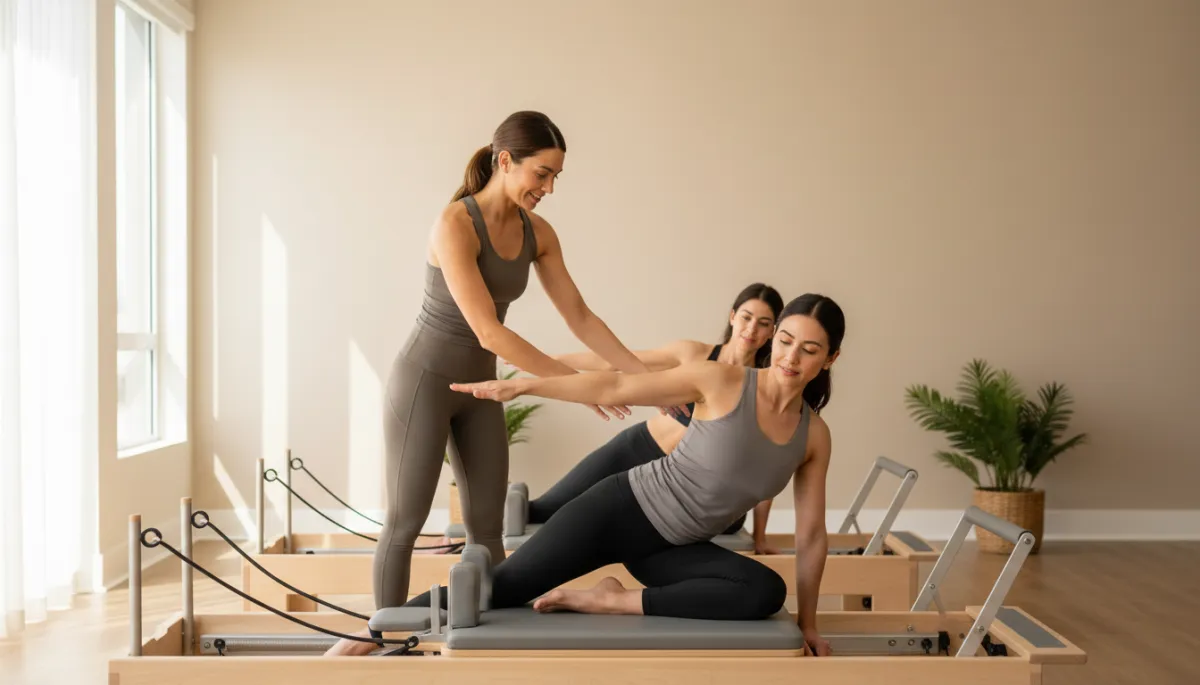
Small groups balance community support with the focused guidance your body needs.
How Pilates Builds Core Strength, Posture, Mobility, Balance, and Body Awareness
At its heart, Pilates is designed to create a body that is strong, aligned, and responsive. In a private, duet, or small group session, each of these elements can be emphasized and refined based on what your body needs most.
Core Strength That Supports, Not Strains
When many people think of “core work,” they imagine crunches or planks that leave the neck and back feeling tense. Pilates takes a different approach. It focuses on the deep core muscles—including the transverse abdominis, multifidi, diaphragm, and pelvic floor—that stabilize the spine from the inside out. With individualized cueing, you learn how to engage these muscles without gripping or holding your breath, so your core becomes a reliable support system for every movement you make.
Posture That Feels Natural and Sustainable
Poor posture is often blamed on “bad habits,” but it is usually a reflection of how your body has adapted to pain, work demands, or past injuries. In a personalized Pilates setting, you are not scolded for your posture—you are guided into new possibilities. Through carefully chosen exercises, you explore how to stack your head, ribcage, and pelvis in ways that feel lighter and more balanced. Over time, this improved alignment can ease stress on your joints and reduce the effort it takes to sit, stand, and move throughout your day.
Mobility, Balance, and Body Awareness for Everyday Life
Pilates is not just about strength; it is about quality of movement. In a private or small group session, your instructor can help you:
Gently increase joint mobility in areas that feel stiff, such as hips, shoulders, or the mid-back.
Improve balance and coordination so tasks like walking, climbing stairs, or turning quickly feel safer and more stable.
Develop body awareness—your ability to sense where you are in space and how you are moving—so you can catch and change unhelpful patterns before they lead to pain.
This combination of strength, mobility, balance, and awareness helps you feel more capable in everyday life, whether you are lifting groceries, playing with your kids, or simply getting out of bed with less stiffness in the morning.
The Role of Pilates in Supporting Pelvic Floor Therapy
Many people—of all ages and genders—experience pelvic floor dysfunction at some point in their lives. This may be related to pregnancy, childbirth, surgery, aging, chronic coughing, heavy lifting, or even long-term stress and bracing patterns. Symptoms can range from leaking and pelvic heaviness to low back pain, hip pain, or a sense of instability in the core.
Pilates, especially when delivered in a private or small group setting, can be a valuable complement to pelvic floor physical therapy. While it is not a replacement for medical care, it can reinforce what you are learning in therapy and help you integrate those concepts into your everyday movement.
Breath and core coordination: You learn how the diaphragm, deep abdominals, and pelvic floor work together, and how to use your breath to support movement rather than brace against it.
Gentle strengthening without strain: Exercises can be selected and modified to avoid bearing down or overloading the pelvic floor while still building meaningful strength and stability.
Whole-body support: Because the pelvic floor does not work in isolation, Pilates helps you address hip alignment, ribcage position, and spinal mobility—all of which influence pelvic health.
⚠️ Important: Pilates is a powerful addition to a pelvic health plan, but it does not replace individualized medical care or pelvic floor physical therapy. Always follow the guidance of your healthcare providers and share their recommendations with your Pilates instructor.
Designing a Personalized Pilates Program for Core and Pelvic Stability
One of the biggest advantages of working in a private, duet, or small group setting is the ability to create a truly personalized program. At Pilates 4 Me in Gilbert, sessions are not copied from a template. Instead, your instructor considers your history, your current symptoms, your daily demands, and your long-term goals to build a plan that feels realistic and supportive.
Start with where you are: Your first sessions may focus on simple breathing, gentle core activation, and supported positions that feel safe for your back and pelvis. This foundation work is not “easy”—it is essential.
Layer in challenge thoughtfully: As your stability improves, you may gradually add more dynamic movements, resistance, and coordination tasks. Each new exercise is introduced with care, so you never feel thrown into something your body is not ready for.
Connect Pilates to real life: Your instructor can help you translate what you do on the mat or reformer into how you bend, lift, twist, and carry things in daily life. This is where the real transformation happens—when the benefits of Pilates follow you out of the studio and into your everyday routines.
Over time, a personalized Pilates program can help you feel more grounded through your feet and pelvis, more supported through your core, and more open and mobile through your spine. For many people, that translates into less pain, more energy, and a deeper sense of ease in their bodies.
Private, Duet, or Small Group: Which Option Is Right for You?
At Pilates 4 Me in Gilbert, there is no “right” or “wrong” way to begin—only the option that best matches your current needs, comfort level, and budget. Each format offers its own benefits:
Private sessions: Ideal if you are managing significant pain, recovering from surgery or injury, or simply prefer one-on-one attention. Every minute of your session is tailored to your body and your comfort level.
Duet sessions: Perfect if you want to practice with a partner, friend, or family member who has similar goals. You still receive individualized cueing and modifications, while enjoying the motivation and connection of moving together.
Small group sessions: A great option if you appreciate a sense of community but still want your instructor to be able to watch your form and offer personalized feedback. Class sizes stay intentionally small so you never feel like just another face in the room.
No matter which option you choose, the common thread is individualized care. Your instructor is invested in your progress, your comfort, and your long-term wellness—not just in getting you through a workout.
Move Better, Feel Stronger, Live with Greater Ease
Whether you want to move with less pain, build strength, improve flexibility, support pelvic floor health, or simply feel more confident in your body, a personalized Pilates experience can make all the difference. In a private, duet, or small group setting, you are not trying to fit into a generic program. Instead, the program is shaped around you—your history, your needs, and your hopes for the future.
At Pilates 4 Me in Gilbert, Arizona, the rehab-infused approach is designed to meet you where you are and help you move forward with confidence. Each session is an opportunity to learn more about your body, release unnecessary tension, and build strength in a way that feels sustainable and supportive. Over time, those small, intentional steps add up to meaningful change—less pain, more ease, and a greater sense of trust in what your body can do.
Ready to get started? Schedule a private, duet, or small group session at Pilates 4 Me and discover how personalized Pilates can help you move better, feel stronger, and live with greater ease—one intentional movement at a time.